Affiliate Disclosure: This article contains affiliate links. If you purchase through one of these links, we may earn a commission at no additional cost to you.
Special Report/Water Preparedness
Updated September 2026 • 8 min read
A Different Way to Think About Emergency Water
Most Families Store Water for an Emergency. Few Think About the Water Already in the Air.
Stored water makes sense — but every stored supply is finite. That is why some preparedness-minded households are exploring another idea: learning how moisture already present in the air can potentially be collected through condensation.
Home Resilience Report Editorial Team
Sponsored Research Feature
Condensation is something most of us have seen thousands of times: water vapor in the surrounding air becomes liquid when conditions allow it to cool sufficiently.
Most emergency plans begin with a familiar checklist.
Food.
Flashlights.
Batteries.
Medicine.
And water.
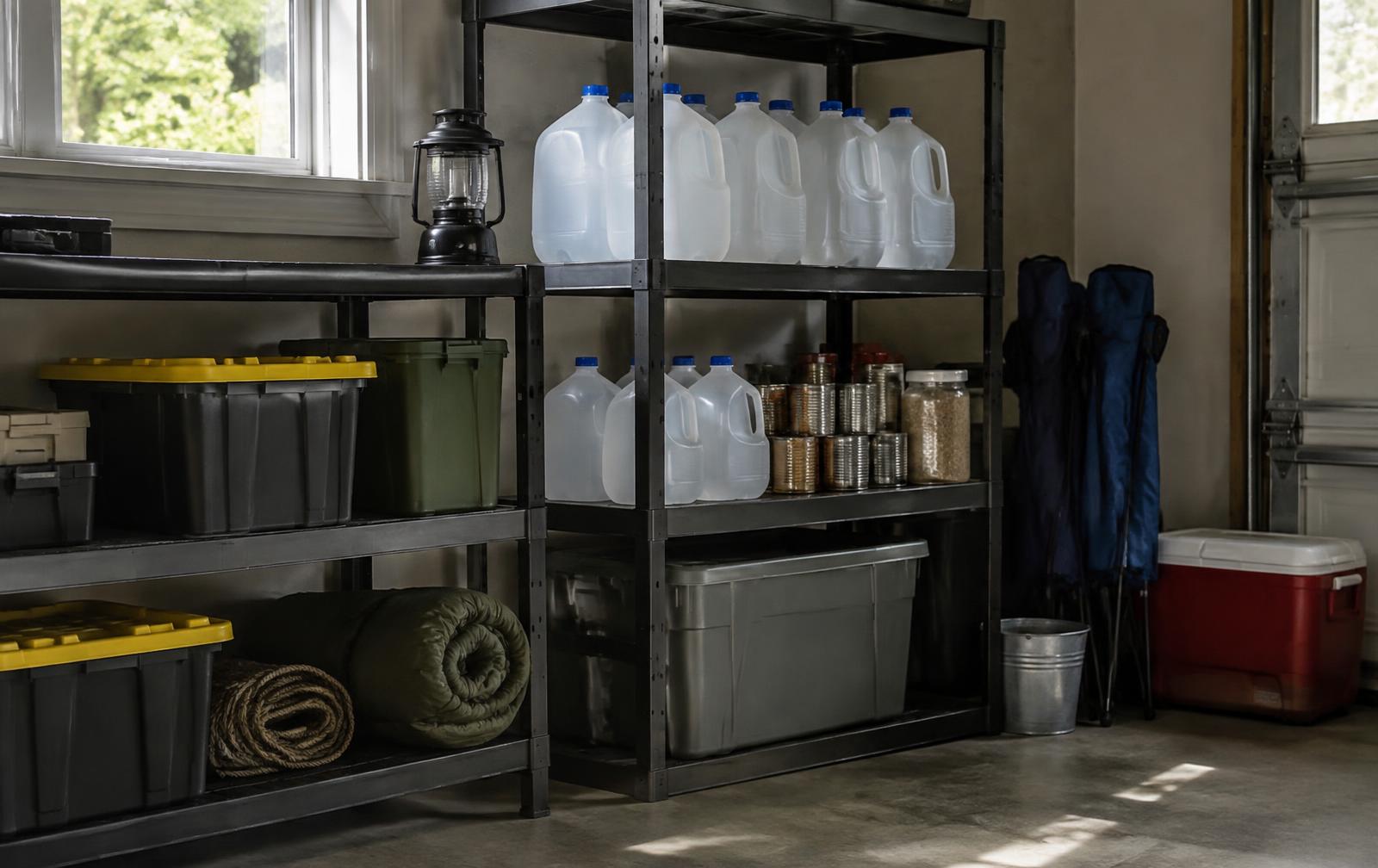
Of all those supplies, water presents one of the most difficult storage problems.
It is heavy. It occupies a surprising amount of space. And unlike a flashlight or first-aid kit, every gallon you use is one gallon you no longer have.
Storing water is still sensible. But it raises another question:
What happens after the water you've stored is gone?
"Preparedness isn't only about how much you can store. It's also about understanding your options."
That question led us to an unusual category of technology most people rarely think about:
Atmospheric water collection.
The term sounds complicated. The idea is not — and you've probably watched it happen without realizing it.
You've Seen Water Come Out of the Air Before
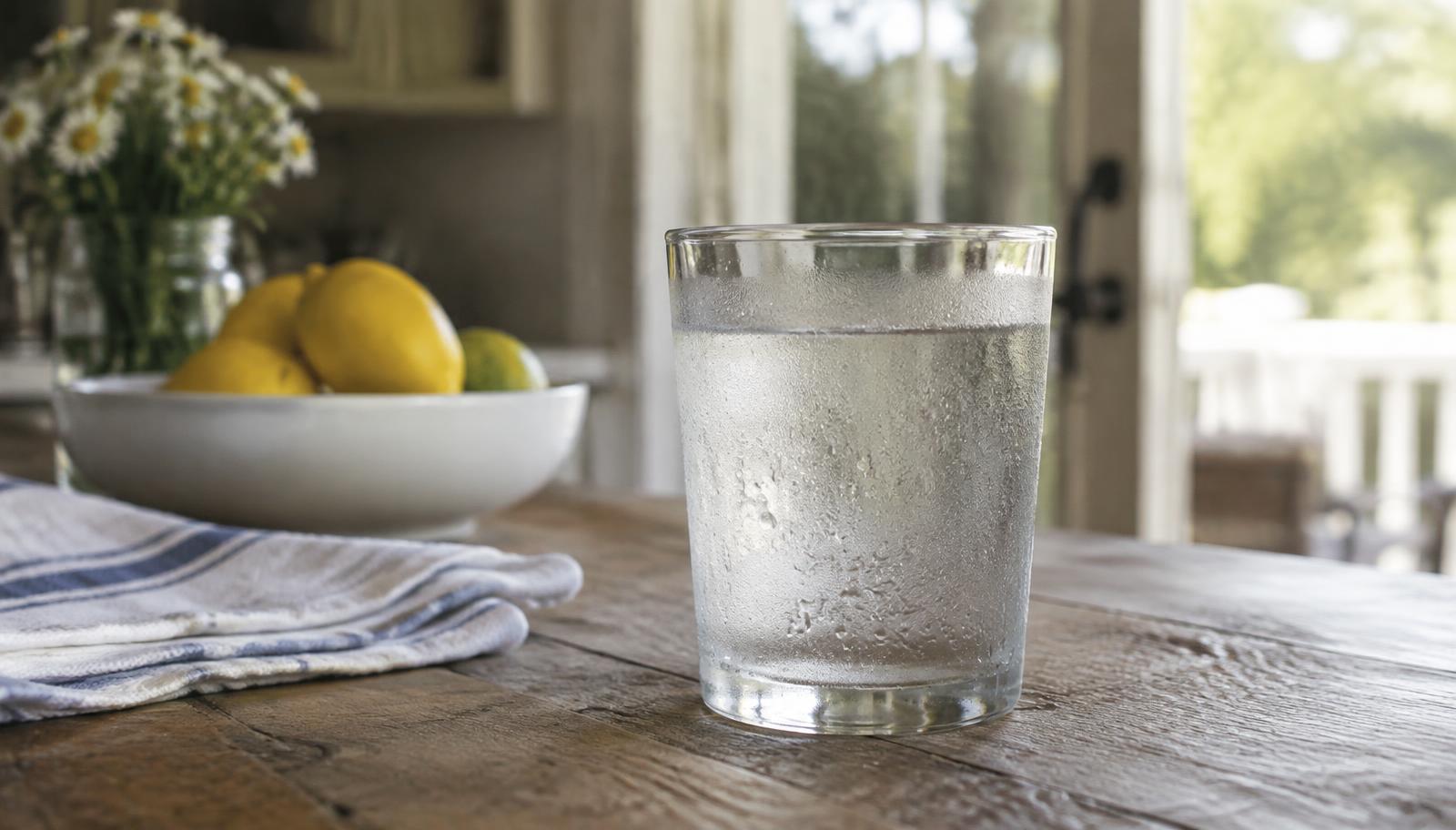
Take a cold glass outside on a warm, humid day.
Within minutes, tiny droplets begin forming on the outside.
The glass isn't leaking. The water came from vapor already present in the surrounding air.
When moist air meets a sufficiently cool surface, some of that water vapor can condense into liquid.
That familiar physical process is the basic principle behind atmospheric water collection.
STEP 1
Humid Air
Air naturally contains varying amounts of water vapor.
STEP 2
Cooling
Under appropriate conditions, air encounters a cooler surface.
STEP 3
Condensation
Some water vapor changes from gas to liquid.
STEP 4
Collection
The condensed liquid can be captured for appropriate treatment and use.
Output depends heavily on local humidity and temperature — more on that below.
The amount of moisture available for collection changes dramatically with temperature and relative humidity.
The Question Isn't "Should You Store Water?"
It's whether storage should be your only plan.
Bottled water and emergency containers have an obvious advantage:
They're simple.
Fill them, store them properly and keep them available.
But they also have an obvious limitation.
They're finite.
That makes water preparedness different from simply buying more supplies.
A more resilient approach may involve layers.
Stored water remains a sensible first layer — but every reserve is finite.
Store
Keep an appropriate emergency supply available for immediate needs.
Identify
Know the reliable water resources available around your home or property.
Learn
Understand practical ways water might be collected, treated and managed if circumstances change.
This Is Where Things Got Interesting
A DIY Guide Is Teaching People How This Water-From-Air Concept Works
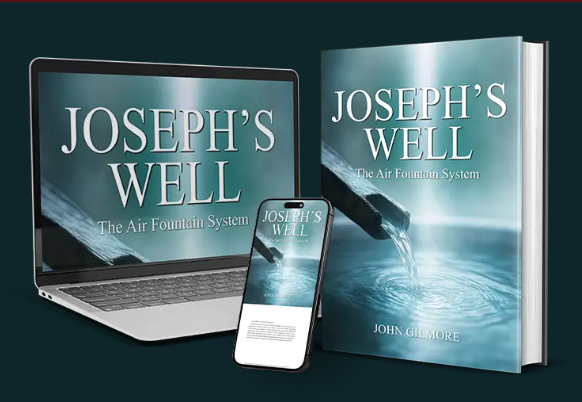
While researching atmospheric water collection, we came across a program called Joseph's Well.
And there was one important distinction worth understanding immediately.
Joseph's Well isn't selling you a giant commercial atmospheric water machine.
It's teaching the underlying DIY process.
The Guide We Discovered
What Exactly Is Joseph's Well?
Joseph's Well is an instructional DIY program centered around atmospheric water collection — the same condensation principle you see on a cold glass.
Instead of selling a costly finished machine, it explains how the system can be assembled using clear plans and step-by-step instructions, turning a simple principle into a hands-on project.
Step-by-Step
Clear DIY guidance
Visual Plans
Blueprints & schematics
Flexible Power
Grid and off-grid considerations
Please note: Joseph's Well is instructional material, not a finished plug-and-play machine. Components are sourced separately, and build costs can vary. Check the official page for current fulfillment details.
You Now Know the Principle
The more interesting question is how that simple condensation process is turned into a working DIY system.
That's the part Joseph's Well is designed to explain.
See the complete DIY method and current offer on the official website.
Sponsored affiliate link
What the Joseph's Well Program Is Designed to Teach
According to the current Joseph's Well presentation, the program is built around more than a single diagram.
①
Step-by-Step Build Guidance
A guided process explaining the system from preparation through assembly.
②
Video Instruction
Visual instruction intended to make the DIY build easier to understand.
③
Blueprints & Schematics
Printable visual references showing how major pieces of the system fit together.
④
Materials Guidance
Information about the components needed to complete the project.
⑤
Grid & Off-Grid Considerations
The vendor's program discusses conventional electrical operation as well as an alternative off-grid configuration.
⑥
Water Storage & Treatment Information
Supporting materials discuss storing, purifying and handling collected water.
Offer contents can change — confirm the current package on the official page.
Before You Continue
What This Kind of System Can — And Cannot — Promise
Atmospheric water collection is real physics.
That doesn't mean every environment produces the same result.
What Is Reasonable
✓Air can contain water vapor.
✓Condensation can convert some of that vapor into liquid.
✓Atmospheric water collection technology exists.
✓A DIY project can teach the principles behind that process.
✓Output can improve or decline as environmental conditions change.
What You Should Not Assume
×That every climate will produce the same amount of water.
×That the system guarantees a particular daily output.
×That collected water is automatically safe to drink.
×That a DIY system replaces every other emergency water source.
×That every build will cost exactly the same amount.
The practical effectiveness of any atmospheric water collection system depends heavily on local temperature, relative humidity, equipment, energy use, maintenance and system configuration.
Why Location Matters
Dry Air
Lower available atmospheric moisture
Moderate Humidity
More moisture available for condensation
High Humidity
Greater atmospheric moisture potential
Illustrative concept — not a Joseph's Well performance test.
There's Another Reason a Physical Preparedness Guide Can Be Useful
Most of us now keep nearly everything on a phone, laptop or cloud account.
That's convenient.
But preparedness information serves a slightly different purpose.
A physical reference can remain on a shelf, in a workshop or with other emergency materials and be revisited without searching through old downloads or relying on a particular device.
For people who like maintaining a home preparedness library, that makes the printed Joseph's Well guide particularly easy to understand:
It's practical knowledge you can keep with your other references.
Keeping important instructions in physical form can make them easier to reference during a hands-on project.
A Different Way to Think About Self-Reliance
The Most Interesting Part May Not Be the Machine
A finished piece of equipment gives you an object.
A set of instructions can give you understanding.
That's an important distinction.
A person who understands why moisture condenses, how the major components interact and which environmental variables affect the process has learned something that exists beyond any single device.
That doesn't make the project effortless.
It doesn't guarantee a particular outcome.
But for people interested in DIY preparedness, the knowledge itself can be part of the value.
"Equipment is useful. Understanding what the equipment is doing can be even more useful."
Who Is Joseph's Well Most Likely to Interest?
Home Preparedness
For people building a layered household emergency plan.
Homesteading
For people interested in practical systems they can understand and maintain themselves.
Off-Grid Interest
For people exploring resources that may operate with reduced dependence on centralized infrastructure.
DIY Learners
For people who enjoy building, troubleshooting and understanding how a system works.
Not the right fit for anyone who wants a ready-made appliance with no hands-on work.
Want to See the Actual Build Method?
See How Joseph’s Well Turns the Concept Into a DIY Project
The official presentation explains the build process, the materials, the system layout and what is currently included with Joseph's Well.
Continue to the official Joseph's Well presentation.
Why Not Just Store More Bottled Water?
You can.
And keeping appropriate emergency water is still sensible.
Joseph's Well shouldn't be positioned as a reason to stop storing water.
The appeal is different.
Storage gives you a finite reserve.
Knowledge gives you another option to investigate.
Approach
Advantage
Limitation
Stored Water
Advantage:Immediately available
Limitation:Finite and space-intensive
Rain Collection
Advantage:Can collect meaningful water under suitable conditions
Limitation:Dependent on rainfall, collection area and local rules
Atmospheric Collection
Advantage:Uses moisture present in the air
Limitation:Performance depends strongly on climate, energy and equipment
Preparation Without Panic
For Some Families, Preparedness Is Also About Stewardship
Preparing for uncertainty does not have to mean living in fear.
For many families, it simply means being thoughtful with what they have, learning practical skills and trying to reduce unnecessary dependence on a single source.
Joseph's Well speaks strongly to that idea.
Learn. Build. Understand. Prepare. And keep perspective.
The value of preparedness is not predicting exactly what will happen.
No. Joseph's Well is an instructional DIY program. It teaches the principles and build process behind an atmospheric water collection project. Required components must be sourced separately.
The general concept relies on condensation. Air contains water vapor. When appropriate environmental and equipment conditions allow that air to cool sufficiently, some of the vapor can condense into liquid that can be collected.
No. Atmospheric water collection is highly dependent on conditions such as humidity, temperature, equipment configuration, airflow and operating time. Results can vary substantially by location and season.
No. Water intended for human consumption should be appropriately collected, treated, sanitized and tested according to applicable water-safety practices and local requirements.
The Joseph's Well program is marketed as beginner-friendly, but it is still a hands-on DIY project. Users should be comfortable following instructions, sourcing components and using basic tools safely.
The vendor's current program includes information about an off-grid power configuration. The actual components, performance and energy requirements will depend on the specific build.
It should not be treated as your only emergency water plan. Stored water and other reliable sources can remain important parts of household preparedness.
The current vendor presentation describes step-by-step instruction, video guidance, blueprints, schematics, materials information, on-grid/off-grid guidance and supplemental water-preparedness materials. Offer contents may change, so verify the current package on the official presentation.
The current official presentation advertises a 60-day Peace-of-Mind Guarantee. Review the current official terms before purchasing.
Use the link below to continue to the official Joseph's Well presentation and review the current package and purchase terms.
Official Joseph's Well website • Current offer details on next page
Important Notice
Joseph's Well is educational DIY material, not a finished water generator. Results vary with climate, equipment and construction. Treat and test water intended for drinking, follow applicable safety rules, and verify current offer and guarantee terms on the official website.